
Many families operate like a play with an unspoken script.
Nobody ever sits you down and assigns you a character, and there’s no audition or rehearsal.
Yet, somehow, from a young age, children are assigned “roles” that help the family cope with stress, conflict, addiction, mental illness, financial pressure, or emotional instability.
Unfortunately, these roles aren’t random.
They’re adaptive, intelligent, and, in many cases, survival strategies. And the most uncomfortable truth is that you might be living your adult life according to a childhood script you didn’t choose.
According to a landmark CDC and Kaiser Permanente study, over 60% of U.S. adults report experiencing at least one adverse childhood experience, including abuse or household dysfunction. The same research found a direct link between those early experiences and depression, anxiety, and relationship problems in adulthood.
Your work ethic, relationships, fear of conflict, need to be needed, and habit of overachieving or self-sabotaging are all linked to it.
Image credits: 2meirl4meirl / Reddit
Some people say they’re just personality traits, but they’re actually echoes of the role you learned to play in your family unit growing up.
Understanding this is like unlocking a secret code, and suddenly, everything makes sense. Your burnout, your emotional unavailability, your fear of speaking up.
You’re limited by your past, but it doesn’t have to be that way forever.
These roles were survival mechanisms in childhood, but they’re holding you back in adulthood.
Today, we’ll break down five common hidden family roles to help you step out of that play and into a new version of yourself.
The 5 Hidden Roles in a Family System
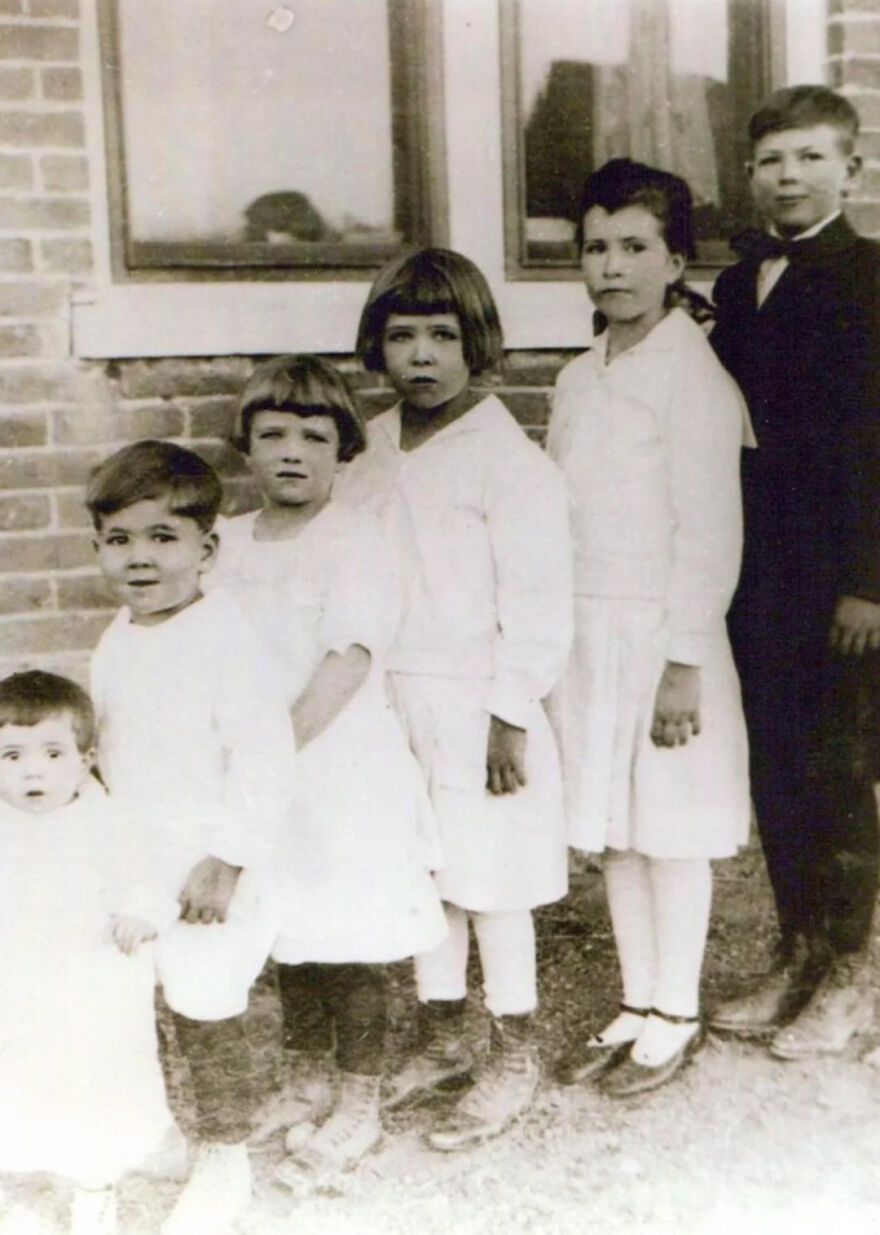
Image credits: SalseraRivera1347 / Reddit
Dysfunctional families often separate their children into different roles, but there are five common roles to be aware of.
The Hero
Also known as the Golden Child, the Hero is the high achiever who tries to save the family by being perfect, successful, and responsible.
They’re a supportive sibling and a child that parents can rely on to provide a lot while needing only a little. On the surface, this role looks like victory, but it’s fueled by an underlying desire to “save” the family by doing everything right.
The Hero emerges in chaotic or unstable households. When adults are overwhelmed, they’re the child who unconsciously steps up. The downsides in adulthood include chronic burnout, perfectionism, fear of failure, and a constant need for validation.
The Scapegoat
Often unfavorably compared to the Hero, the Scapegoat is the black sheep who acts out and gets the blame for everything.
They rebel to regain a sense of control and distract from broader issues in dysfunctional families. Sometimes they speak uncomfortable truths that nobody else will, seeing it as their responsibility to bear the burden.
The Scapegoat internalizes the message “I’m the problem” from a young age, leading to feelings of low self-esteem, deep resentment, self-sabotage, and chronic outsider syndrome in adulthood. They carry these feelings into their friendships, workplaces, and romantic relationships.
The Lost Child
Practically invisible, the Lost Child survives by disappearing. They’re quiet, independent, and low-maintenance, so parents wrongly assume they don’t need much, leaving them alone to retreat into books, hobbies, and their imaginations. When conflicts arise within the family, invisibility feels safer than engagement.
In adulthood, the Lost Child often experiences chronic loneliness, difficulty expressing needs, struggles with intimacy, and emotional numbness. They’re hyper-independent, which is often seen as a good thing, but it means they become accustomed to surviving alone without anybody to rely on.
The Mascot
Also called the Clown, the Mascot diffuses tense situations with humor. When arguments start brewing, they crack a joke, and when somebody cries, they lighten the mood. They become the distraction and emotional shock absorber within the family, masking their own trauma with humor.
Being funny is a positive trait, but it’s more of a defense mechanism for the Mascot. The main downsides in adulthood include difficulty being taken seriously, a fear of vulnerability, emotional avoidance, and feeling unseen beneath the persona. Behind their funny facade, the Mascot is emotionally hardened.
The Enabler
In high-conflict environments, the Enabler becomes the peacekeeper, the nurturer, and the caregiver, despite their age and own emotions.
They always put others before themselves and anticipate everyone else’s needs. In unstable homes, this role often develops around addicted parents or those with poor mental health.
Enablers become hyper-attuned to others’ moods, but they often abandon themselves in the process.
As adults, they often become codependent, ignore personal boundaries, feel responsible for loved ones, and attract spouses who need “saving”. Often, they may not know what they need to be happy.
When Roles Collide: Real-Life Dysfunctional Families
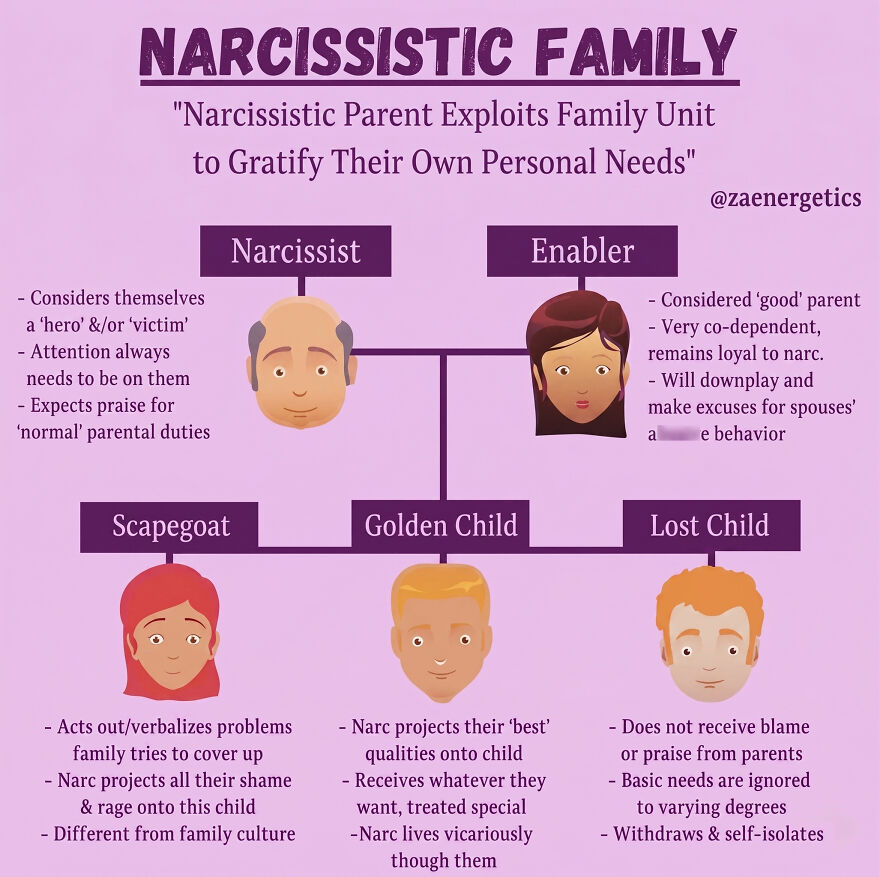
Image credits: kittensarepink / Instagram
Sadly, these roles don’t just go away with time.
According to Psychology Today, childhood experiences shape adult development, and even seemingly coincidental factors like birth order can have as big an impact as the way we were treated.
The scale of this problem is significant: CDC research estimates that preventing adverse childhood experiences could reduce the number of adults suffering from depression by as much as 44%. This negatively impacts how we approach marriage, friendships, and parenthood when we’re grown.
In many cases, unaddressed trauma destroys fragile relationships in adulthood. Consider this Reddit thread about a scapegoated brother about three siblings, in which one brother was labeled the “problem child.” He was treated poorly by his parents, and his siblings grew up aware of the favoritism. Even as an adult, he remained the Scapegoat.
Or this Reddit post about Golden Child and Scapegoat siblings of two siblings who were torn apart by perceived “labels”, with the supposed Golden Child and Scapegoat separating themselves based on behavior. Instead of confronting the issues between them, one sibling weaponized those childhood roles, sparking numerous arguments.
These aren’t just Internet dramas; they’re real-life stories of dysfunctional families, and you might recognize the dynamics in your own life. What may be dismissed as a personality clash could be so much more damaging.
How to Step Out of Your Assigned Family Role
Image credits: _maggiestephenson_ / Instagram
If you’ve been feeling stuck in your role for years, or if you’ve only just realized it, you don’t have to accept it. This is the important part, where we show you exactly how to step out of your assigned role forever.
Awareness is the First Step
The first thing to do is stop blaming yourself for the role you played in the family system as a child. It wasn’t your choice, nor was it a character flaw; it was a natural evolution brought on by the unhealthy family dynamics you were raised in.
Shame keeps you stuck, but self-compassion, reflection, and forgiveness are the keys to breaking free from dysfunctional family roles.
Identify Your Script
Even if you’re aware of the role you were assigned, you might not understand how it came to be. To clarify that, ask yourself these questions:
- What did I feel I had to do to keep myself safe?
- What earned me approval?
- What behavior caused withdrawal or punishment?
- Which emotions were not allowed?
- How did other people treat me?
Your answers will reveal the script. Maybe you had to be responsible, or you had to deflect. Perhaps you were most praised when you put yourself last or “finally” did things the correct way.
If you grew up in a tense, hostile, or outright combative environment, you were likely punished for any behavior that upset the established, unhealthy dynamic. Any unwanted emotional displays may have caused mistreatment.
Seeing the script gives you a golden opportunity to change the answers.
Feel Your Emotions
Emotions often don’t make sense, especially if you’ve always been taught to hide or fake them. Per NAPAC’s trauma healing guidance, healing involves processing the past as it happened, taking on one issue at a time, and letting yourself fully experience anger, sadness, and grief. Research backs this up: a 2024 study of over 25,000 adults found that each additional adverse childhood experience increased the odds of a psychiatric disorder in adulthood by 52%.. You can’t get over those feelings until you let them out.
Some people find it beneficial to consult a therapist to work through the hardest emotions, whereas others prefer to process things on their own.
It all depends on how deeply your childhood emotions still affect you.
Practice Discomfort
After coming to terms with your emotions, it’s time to take the biggest step in your journey: preparing to leave your role. Stepping out of it often feels wrong because you’ve grown accustomed to it.
The Hero feels lazy when they rest and unwind. The Scapegoat is hesitant to express themselves for fear of negative attention. The Lost Child feels uncomfortably exposed when they find their voice. The Mascot discovers an emotional heaviness behind their cheery demeanor. And the Enabler feels selfish when they finally say “no”.
That discomfort isn’t nice, but it’s essential for growth. It’s a sign that you’re finally making a change, and you have to stick with it, no matter how disconcerting, in order to come out the other side, free of the past.
Set New Boundaries Quietly
You don’t need to make a dramatic announcement, and you shouldn’t feel obligated to explain your transformation. You simply start setting new boundaries and reacting differently to the things you’ve always been expected to accept.
When baited, you refuse to rise to it. When asked to overperform or make a spectacle out of yourself, you decline. When expected to fix things that aren’t your doing or responsibility, you step back. And when your boundaries are ignored, you speak up and defend them.
A Final Thought
Remember, you are not your role. The Hero, Scapegoat, Lost Child, Mascot, and Enabler are all restrictive labels that were assigned years ago and hold no meaning today. You are a complete person with your own emotional and physical needs and desires. By identifying these dysfunctional patterns, you’ve already started the work of rewriting your own script and taking meaningful steps towards an improved sense of self.
Your identity belongs to you, not your family history, and it’s about time you took it back.
FAQ
Can a person have more than one role? ﹀
Yes, sometimes a person can have more than one familial role. For example, the Hero may also be the parentified child who is forced to enable others because they always want to keep the peace. Or the Mascot may also be treated like the Scapegoat when their humor is used against them.
Does my family know they assigned me this role? ﹀
In many cases, families are aware of the role a child plays, but the dynamics of the relationship mean those roles are dismissed as personality traits. They might think the child is “successful,” “disappointing,” or “responsible” without considering why they display those traits.
How do I get my family to stop treating me like the “Scapegoat”? ﹀
Perhaps the most difficult thing to escape is the Scapegoat role, because a toxic family dynamic requires an emotional sacrifice to blame on. To get your family to stop treating you like the Scapegoat, you have to separate yourself from that dynamic, relinquish the burden, and refuse to accept disrespect or mistreatment.
What if I’m the ‘Enabler’ and I’m scared to stop? ﹀
Enabler children often have parents with poor mental health or substance use issues, so they’re scared to withdraw from their role in case something bad happens. But it’s crucial to set boundaries and stick to them, otherwise guilt trips and empathy manipulations will keep you trapped by dysfunction forever.