Prosecutors in Rome have opened a culpable homicide investigation into the tragedy that claimed the lives of five Italian divers in the Maldives.
The case, believed to be the worst single diving accident in the island country’s history, still presents many unanswered questions, with diving experts sharing their theories on what may have caused the group never to resurface.
The Maldives government has also announced a probe into the tragedy that claimed the lives of diving instructor Gianluca Benedetti, 42, Monica Montefalcone, 52; Giorgia Sommacal, 22; Muriel Oddenino, 31; and Federico Gualtieri, 31.
A homicide probe has been launched into the tragedy that claimed the lives of five divers in the Maldives
Image credits: Muriel Oddenino
Mohamed Hussain Shareef, a spokesperson for the Maldives president’s office, said the investigation by the island country will focus on whether those in charge of the expedition “took the correct precautions.”
“We believe that the retrieval of the bodies will itself reveal a lot, as far as that part of the investigation is concerned,” said Shareef, according to The Associated Press.
Regarding the homicide investigation in Italy, it has not been made public if any specific person or group is the target of the probe.
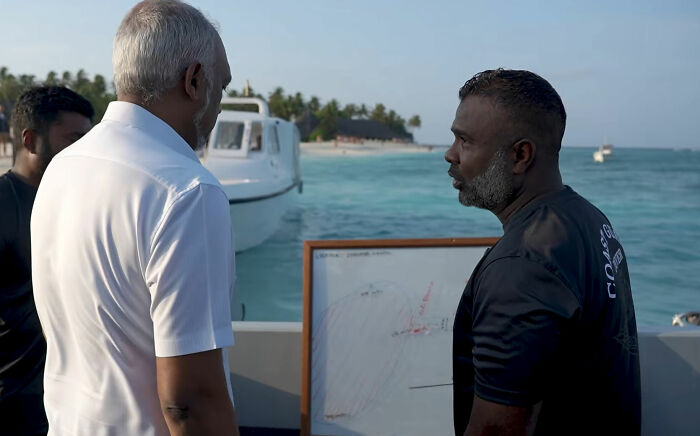
Image credits: presidencymv

The investigators in the Italian capital will order autopsies to be conducted as soon as the bodies are returned to Italy.
Investigators will also question those who were aboard the Duke of York, the boat from which the fatal dive was conducted.
The five scuba divers lost their lives on May 14 during an expedition in the waters of Vaavu Atoll.
The body of diving instructor Gianluca Benedetti was found near a cave entrance, while the other four bodies were found inside the pitch-black third chamber
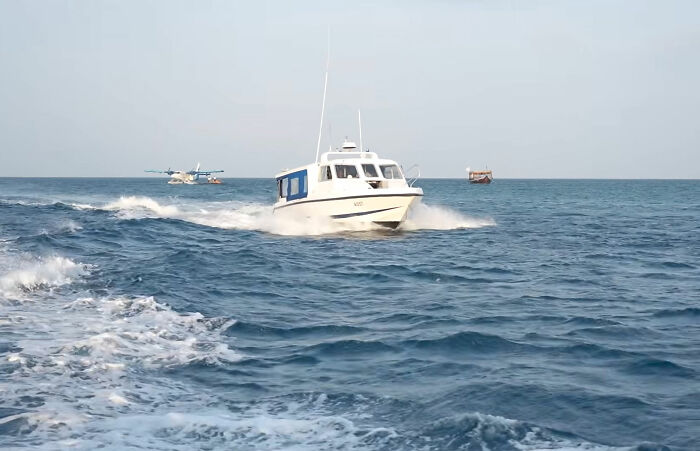
Image credits: presidencymv
The body of Benedetti was discovered the following day near the entrance to the Thinwana Kandu cave.
Three days later, the bodies of the rest of the group were found by a team of Finnish and Maldivian divers at the bottom of the cave’s third chamber, which is in complete darkness.
Sergeant Major Mohammed Mahudhee, a diver for the Maldives coast guard, also lost his life from decompression sickness after assisting in the search operation.
Bodies of four missing Italian divers have been found inside an underwater sea cave in a Maldives atoll, Italy’s Foreign Ministry confirmed on Monday.
According to the ministry, rescue teams recovered the bodies deep within the cave after an extensive search operation. Earlier,… pic.twitter.com/N4WvsoD8f9
— SIKAOFFICIAL🦍 (@SIKAOFFICIAL1) May 18, 2026

The Vaavu Atoll cave is divided into three chambers, which are all connected by narrow passageways.
Ahmed Shaam, a spokesperson for the Maldives government, said the four bodies were found “pretty much together” in the third chamber of the cave, which is the largest.
According to Shareef, the group, led by Montefalcone, a marine researcher and an associate professor of ecology at the University of Genoa, had been issued a permit for the expedition to carry out scientific work.
The tragedy occurred on May 14 during an expedition into the waters of Vaavu Atoll
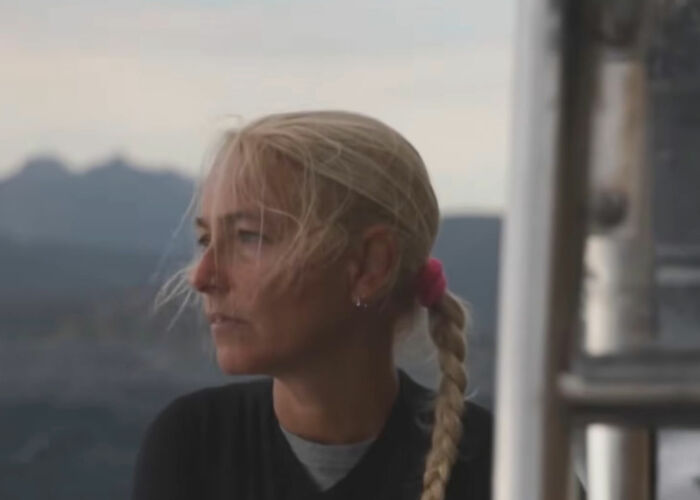
Image credits: MrDeified
The permit reportedly allowed them to descend to 50 m (164 ft), far deeper than the recreational limit of 30 m (98 ft) mandated by Maldivian law.
However, he said the Maldives government was not informed that the group would be exploring the perilous underwater cave, and that two of the divers were not on the list of those issued the permit.
“We didn’t know they were part of the expedition as well. So, all these factors are being reviewed,” the government spokesperson said, adding that there were “certain gaps in the research proposal.”
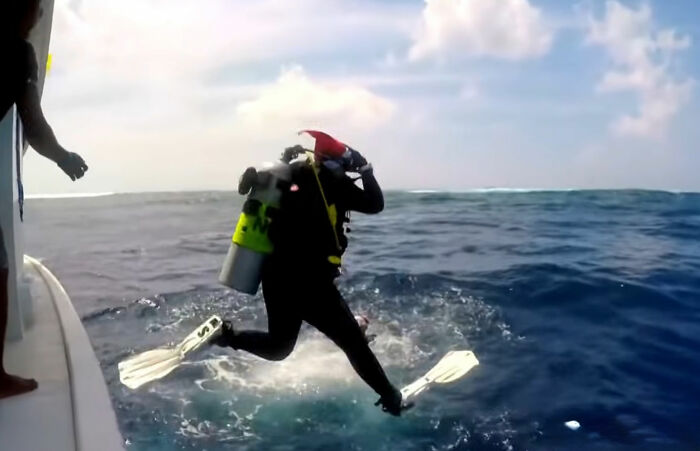
Image credits: MrDeified


The five tourists were found to only be carrying recreational gear used to dive down to 98 ft (30 m).
Shafraz Naeem, a former military diver who has done more than 50 expeditions in the area where the group lost their lives, said the tourists were ill-equipped and lacked proper training to explore the cave, making the deep-water expedition “an accident waiting to happen.”
“I have visited those caves countless times. There is no current. They swam into that third cave. They chose to go in there,” Naeem told the Daily Mail.
Experts have put forward different theories to explain what may have happened to the group of Italian divers

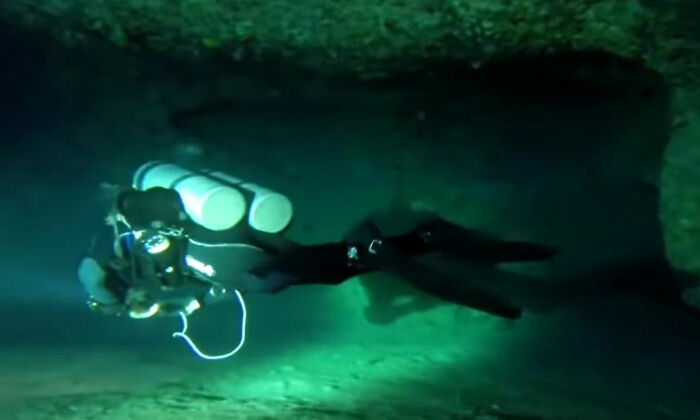
Image credits: MrDeified

“I believe the instructor intentionally swam away from the group. Maybe he legged it up before he ran out of air. The rest of the group d*ed in that third chamber and Benedetti d*ed in the passageway trying to get out.”
Naeem, a former diver for the Maldives National Defense Force with 30 years of technical diving experience, said he never dared to enter the “unforgiving” and “completely dangerous” third chamber where most of the bodies were found.
“It is closed, pitch-black and you can only see where you shine the light. If something goes wrong, you cannot shoot up to the surface like you can in open dives.”
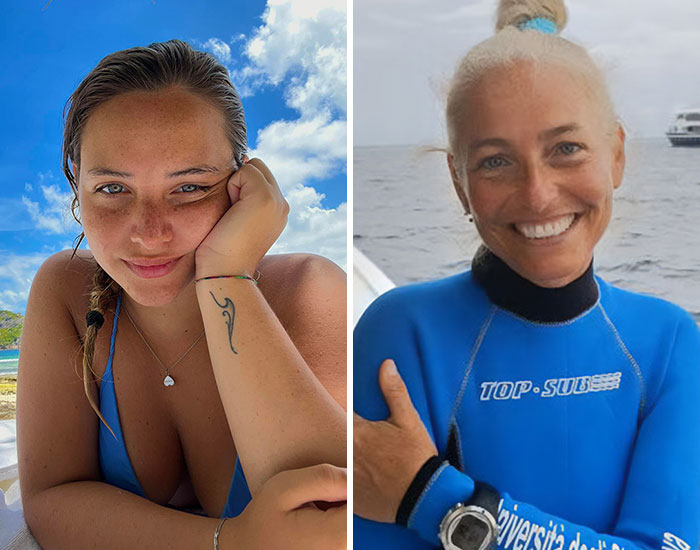
Image credits: Giorgia Sommacal / University of Genova
The expert suggested that the group may have suffered from nitrogen narcosis, a change in consciousness and neuromuscular function caused by breathing compressed nitrogen at deep underwater levels.
This condition leads to impaired judgment, difficulty concentrating, drowsiness, and a feeling of euphoria. Divers often do not realize they are mentally impaired, which can cause them to make dangerous decisions.
“People who are not trained in cave diving or without proper equipment, like this, tend to get knocked by nitrogen narcosis. Then things start to spiral down from there and get worse,” Naeem said.
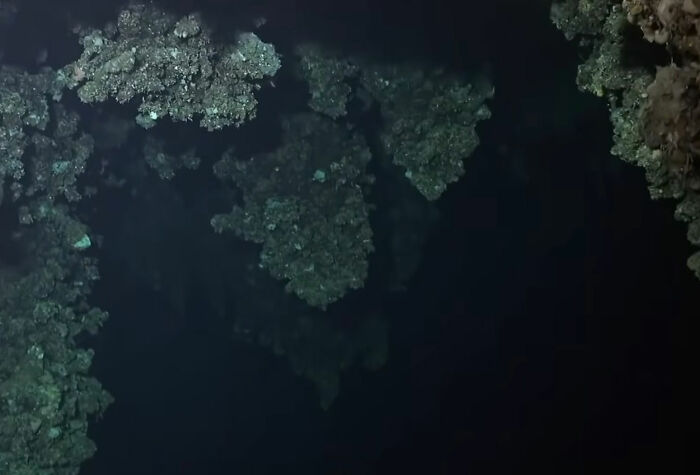
Image credits: MrDeified
Meanwhile, Alfonso Bolognini, president of the Italian Society of Underwater and Hyperbaric Medicine (SIMSI), has put forward a “suction and panic” theory to explain what may have led to the tragedy.
He told Adnkronos that the divers likely did not intend to enter the cave, but instead may have fallen victim to the Venturi effect while inspecting the cave entrance.
This phenomenon causes water to accelerate rapidly through tight spaces, creating a vacuum that may have pulled the ill-equipped group inside.
Experts disagree on whether the group intended to enter the cave

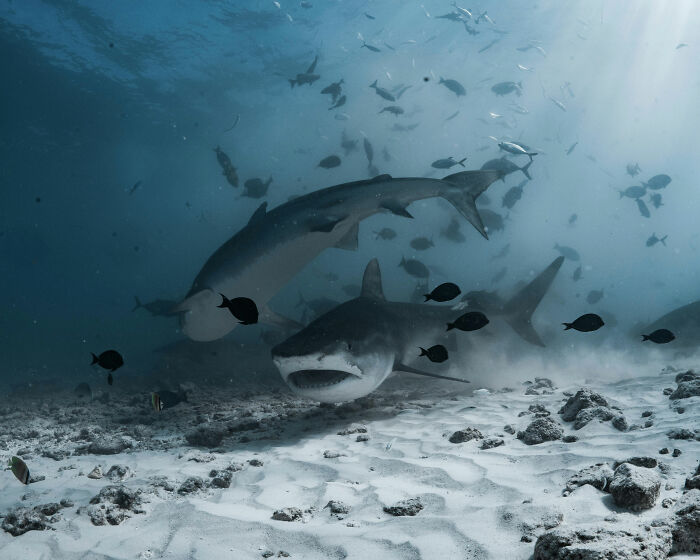
Image credits: adiprayogo liemena/pexels
“With that level of knowledge, it is unthinkable to go so deep without the necessary preparation for that type of exploration. They were probably at the end of the dive, they were there for the coral reef, the caves were not the objective,” Bolognini suggested.
After being sucked inside the cave, the panicked group may have begun making frantic movements, stirring up sand and sediment. This would have turned the water completely cloudy and caused the divers great disorientation, making them unable to find the exit.
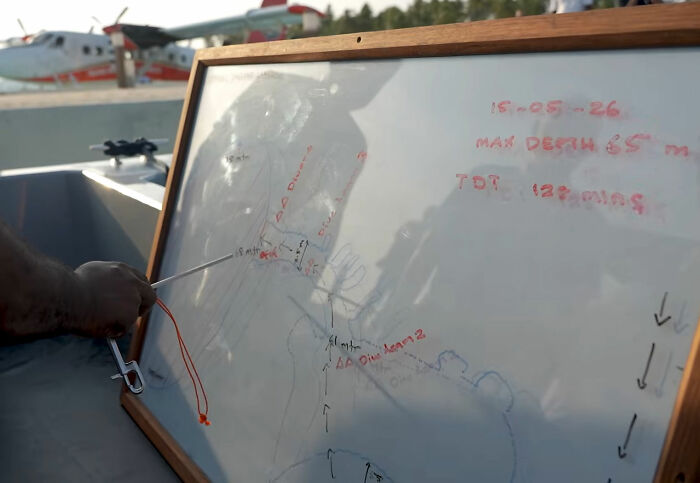
Image credits: presidencymv
Amid the investigation, Albatros Top Boats, which organized the fatal expedition, has denied authorizing or having knowledge of the deep dive, lawyer Orietta Stella told Italian newspaper Corriere della Sera.
Stella stated that the tour company was unaware that the group would descend beyond the recreational diving limit.
“They will find a scapegoat somewhere,” a Facebook user wrote amid the investigation