
Most of the advice about raising kids after separation sounds simple enough: communicate, cooperate, and always put your children’s needs first.
On paper, that approach makes perfect sense. Healthy co-parenting allows children to maintain strong relationships with both parents while growing up in a stable, peaceful environment.
Even when both adults have different parenting approaches, a successful co-parenting relationship is simple when they’re respectful and emotionally mature.
But that advice assumes something crucial: strong communication, conflict resolution, and cooperation between divorced parents.
When “Co-Parenting” Doesn’t Work
Image credits: umbertocsaba / reddit
It’s a sad truth of divorce or separation, but many former relationships don’t end well. Some ex-partners are combative, manipulative, or toxic and are not willing to compromise, even if it negatively impacts the lives of their children.
Conversations intended to discuss simple logistics spiral into fights and accusations, and routine decisions about school schedules or medical appointments become sources of tension.
Parents dealing with difficult exes are often told to “just communicate better”, but this isn’t always realistic or safe. Trying harder to collaborate can simply provide more opportunities for arguments, emotional manipulation, or control.
In these situations, traditional co-parenting can actually increase the emotional strain for everybody involved.
The reality is that sometimes the healthiest parenting strategy after separation isn’t learning to work closely together; it may be learning to function separately while minimizing conflict.
Understanding this distinction can be a turning point for parents trapped in a toxic dynamic.
Understanding High-Conflict Co-Parenting Relationships
High-conflict co-parenting occurs when one or both parents cannot communicate respectfully, necessitating strict boundaries and, often, a shift toward “parallel parenting” to protect the children from ongoing volatility. It’s a difficult process, but necessary for maintaining peace and a sense of stability.
According to the Institute for Family Studies, children can become distressed by parental conflict from as young as six months old, and witnessing it regularly may disrupt sleep, affect their concentration at school, and create serious mental health concerns.
When conflict becomes the default dynamic, children get no sense of what healthy, respectful relationships look like.

Image credits: gatorbait_gonzalez / Instagram
In these cases, parents might frequently raise their voices at each other, play the blame game, or give each other the silent treatment.
One parent may also try to control the other through emotional pressure, guilt, or legal threats, or ignore agreements to try to force different rules and family dynamics.
Over time, this creates an exhausting cycle, especially when one parent is trying to maintain a calm and cooperative environment, only to find their efforts repeatedly met with confrontation.
This dynamic is stressful enough for adults, and potentially life-changing for children, as it shapes their entire upbringing.
Per Psychology Today, even less obvious conflicts can affect children. Forcing them to act as a messenger, hear judgments about the other co-parent, or keep secrets increases feelings of stress.
They may feel pressured to defend one parent, while also feeling disloyal to the other, and making transitions between households can be anxiety-inducing because they don’t know when conflict will kick off next.
Reducing that tension in conflicted co-parenting situations is one of the most important goals for families navigating separation, and it’s always in the child’s best interests.
Successful Co-Parenting vs. Parallel Parenting: Knowing the Difference
Many people assume that co-parenting is the only healthy approach after separation, so they still attempt it even when conflict is high.
However, there are two very different models for raising children across separate households.

Image credits: Pirate_Redbeard / Reddit
Traditional co-parenting relies heavily on cooperation. Co-parents work together, share information, and coordinate schedules and parenting styles.
They try to maintain consistent rules across households and often remain flexible and open with parenting arrangements.
When both adults are committed to this process, it works very well, and children benefit from seeing their parents function as a supportive team.
But co-parenting is often impossible when one parent refuses to cooperate, leading to breakdowns in trust and mutual respect. When conflict between co-parents becomes difficult to manage, and typical styles of conflict resolution stop working, the spillover effect onto the child can be disastrous.
In such cases, family therapists and legal mediators may recommend an alternative: parallel parenting.
This type of parenting is designed for high-conflict relationships. Parallel parents manage their own households independently with separate rules and routines, and communication is strictly limited to information about the children.
Schedules and custody arrangements are followed closely to minimize opportunities for negotiation. Rather than functioning as platonic partners, there is as little communication and as few joint parenting responsibilities as possible.
At first glance, this approach to splitting parenting time may seem cold, disjointed, or uncooperative, but in reality, it creates greater stability for kids.
By reducing situations that trigger arguments, parallel parenting helps to protect children from ongoing parental conflict. They don’t need their divorced parents to be best friends; they just need a predictable environment where adult tension doesn’t dominate their daily lives.
Tactics to Manage High-Conflict Communication

Image credits: anobrainO / Reddit
Even when ex-partners shift towards parallel parenting, some communication is still unavoidable.
Children have schedules, appointments, school or sports events, and activities that require coordination. The challenge is learning how to communicate in ways that reduce conflict, rather than fuel it.
One of the most effective tactics is to remove as much emotion as possible from the interaction.
Instead of attempting to resolve old grievances or defend personal decisions, conversations should focus strictly on the children. Family Mediation and Mentoring suggests “keeping communication business-like” and holding any custody swaps in “neutral” places.
Many parents also benefit from using tools designed for separated families.
Co-parenting communication platforms like OurFamilyWizard or TalkingParents create a centralized space where all messages, schedules, and expenses are documented. Unlike text messages, these apps maintain a permanent record of communication.
This record can discourage aggressive or manipulative behavior, while also simplifying logistics for joint custody agreements, child support, and school events, allowing parents to share costs without further debate. For many separated parents, moving communication out of personal messaging creates an emotional distance that reduces stress.
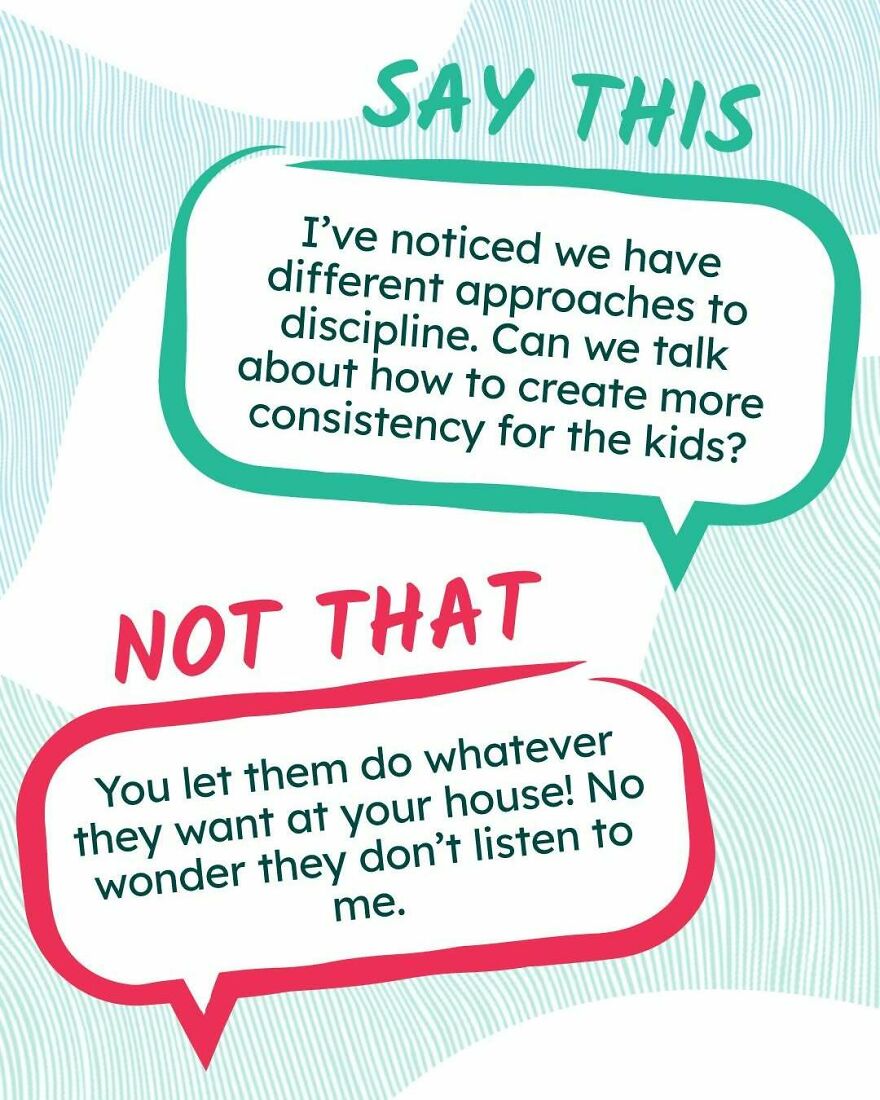
Image credits: talkingparentsapp / Instagram
Another helpful approach is to treat each interaction formally. When engaging with a high-conflict ex, it can help to imagine the relationship as a professional exchange, using brief, factual, and focused language that leaves little room for argument.
You may also adopt a “grey rocking” technique, in which you respond only to messages relevant to your children.
For example, if your ex sends an angry message containing accusations along with a pickup time, simply respond to the pickup time and disregard the combative part.
You may also apply the “24-hour rule”, which encourages you to take some time before responding to avoid being overly emotional, defensive, or angry. This avoids escalation and rebuffs their attempt to get a reaction from you.
High-conflict communicators thrive when they’re aware that their behavior has a negative effect on you, so keep things short, collected, and as neutral as possible.
Not only is this beneficial for the children in the middle, but it also preserves your emotional well-being as you navigate parenting after a split.
Shielding the Kids: The “Buffer Zone”
While managing communication with a difficult ex is important and time-consuming, the most critical responsibility in any high-conflict parenting is protecting children from the emotional fallout. Kids are remarkably perceptive, and they notice tension in conversations, changes in tone, and subtle shifts in mood.
Even when parents try to hide it, children can sense that something is wrong.
Without clear boundaries, children can easily become caught in the middle of adult disputes. One of the most important rules to remember is to avoid negative talk about the other parent in front of the children.
This can be challenging, especially when frustrations are justified, but criticizing your ex forces children into a painful emotional position. They may feel guilty for loving a person who is spoken about negatively, or feel pressured to defend one parent over the other.
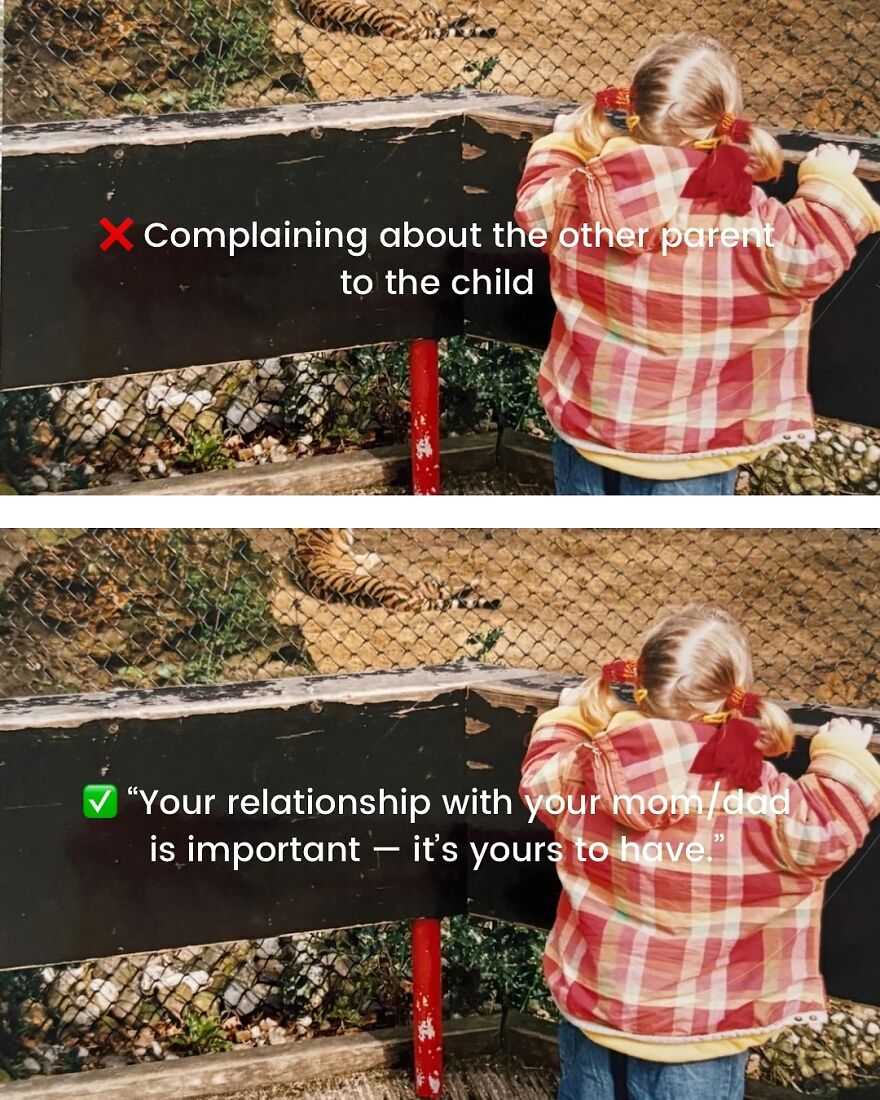
Image credits: growingjourney_ / Instagram
Over time, this dynamic can create stressful loyalty conflicts. According to Psychology Today, if children see their parents argue or badmouth each other, they feel guilty about spending time with them, absorb inappropriate adult information, and instantly submit to aggressive or controlling behavior.
Another common challenge involves differences in parenting styles between households. One home may have stricter rules about bedtime, screen time, or homework, while the other may take a more relaxed approach.
In cooperative co-parenting situations, parents might work together to align their expectations.
In high-conflict relationships, however, attempts to control what happens in the other parent’s home often lead to arguments.
Parallel parenting encourages a different perspective in which each parent focuses on creating stability for the child within their own environment and doesn’t interfere when the child is with the other parent.
Children are capable of adapting to different expectations in different places. Just as they follow one set of rules at school and another at home, they can learn that each parent’s household has its own structure.
What matters most is that at least one home provides a sense of calmness, predictability, and emotional safety. You cannot control your toxic ex, but you can lay stable foundations for your children to openly express their feelings without fear of retribution.
When Your Ex Shows Narcissistic Traits
Not every difficult ex is a narcissist, but co-parenting with someone who displays narcissistic behaviors adds a unique layer of difficulty.
According to Psychology Today, individuals with narcissistic traits often struggle with empathy, view interactions as opportunities for control, and react with hostility when challenged.
In a co-parenting context, this may show up as constant rule-breaking around custody schedules, attempts to triangulate the child against you, “love bombing” followed by withdrawal, or weaponizing legal processes to maintain control.
The narcissistic ex often presents a polished public image while creating chaos privately, which can leave the other parent feeling isolated and disbelieved.
Parallel parenting becomes especially important here. Sharing minimal information, documenting everything through co-parenting apps, and refusing to engage with emotional bait removes the supply that narcissistic behavior thrives on.
Therapists who specialize in narcissistic abuse recovery often recommend the “BIFF” approach to communication: keep responses Brief, Informative, Friendly, and Firm. This neutralizes attempts to provoke an emotional reaction and protects both your well-being and your child’s stability.
Real-Life Co-Parenting Stories
Reading about other parents’ experiences can be both validating and instructive. Across online communities, separated parents have shared moments that capture both the difficulty and the unexpected wins of co-parenting after a tough split.
Some stories show just how challenging a toxic ex can make things.
One woman shared how her ex-husband couldn’t handle her moving on and turned co-parenting into a nightmare, harassing her and threatening to sue over the smallest disagreements until she finally pushed back.
Another mom refused to play along when her ex expected her to pretend they were one big happy family, reminding him that co-parenting means handling what’s necessary for the kids, not rewriting history.
On the other side, there are heartwarming examples too. Parenting vlogger Kristina Kuzmic shared how she still spends Thanksgiving with her ex-husband’s family alongside her current husband and kids, proving that high-conflict beginnings can sometimes soften into genuine warmth.
And in one particularly memorable case, two daughters pulled off a real-life “Parent Trap” during pandemic lockdown, reuniting their divorced parents who eventually remarried.
These real-life moments remind us that no co-parenting journey is linear, and small wins matter just as much as the big breakthroughs.
The Power of Being the Steady Parent
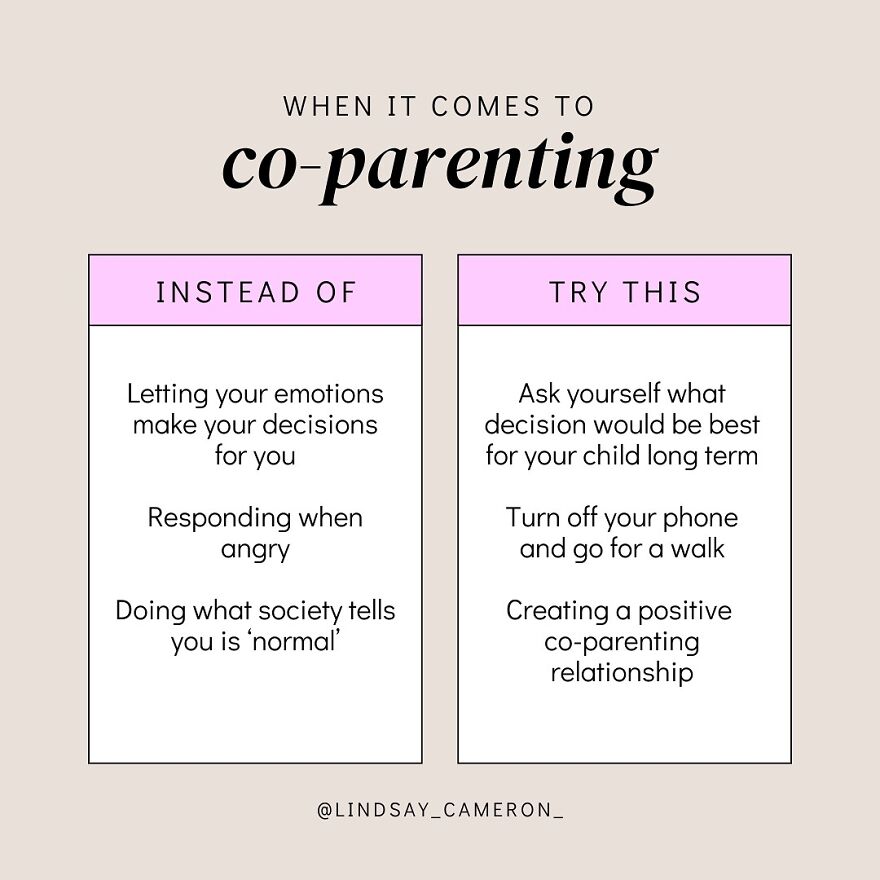
Image credits: lindsay_cameron_ / Instagram
In high-conflict separated families, children often gravitate toward the parent who provides the most stability.
That doesn’t mean being perfect or shielding them from every challenge, but simply showing up no matter what, and providing comfort, reassurance, and a steady emotional presence.
A calm, dependable parent becomes a child’s anchor when the other parent is volatile or flaky.
Establishing routines, maintaining clear expectations, and offering emotional support can make a powerful difference.
According to the Institute for Family Studies, an unstable upbringing shapes a child’s trust, sense of security, decision-making, and responses to difficult situations for the rest of their life. Without a steady presence, they’re more likely to experience poor mental health.
The most important power that the steady parent has is the ability to keep children away from adult disputes. By minimizing conflict, you create a protective buffer that allows them to focus on school, friendships, hobbies, and the normal experiences of growing up.
Choosing Peace
Parenting with a toxic ex can feel like an endless struggle. There may be moments when it seems unfair that you have to remain calm, set boundaries, and avoid conflict while the other parent makes it harder by behaving unpredictably and resisting effective co-parenting strategies.
But choosing the higher ground doesn’t mean you’re letting them win. It’s about protecting your own well-being and creating the healthiest possible environment for your children.

Image credits: lindsay_cameron_ / Instagram
Shifting from traditional co-parenting to parallel parenting, limiting communication to essential information, and maintaining firm emotional boundaries can dramatically reduce stress for everyone involved. You cannot control your toxic ex or their parenting behaviors, but you can control how you respond and what you allow to happen in your own home.
And when that home is peaceful, predictable, and as stress-free as possible, it becomes more than just a home; it’s a sanctuary where your child’s needs are put first, and they can grow up without being pulled into chaotic adult conflict.
In the end, that stability in your child’s life is far more important than winning any argument against your toxic ex, and you may find it incredibly beneficial for your own mental and emotional well-being, too.
Related Reading From the Family Hub
If you’re navigating the emotional fallout of separation, these guides may help you explore specific dynamics you might be facing.
When a toxic ex constantly rewrites history or makes you doubt your own memory, you may be dealing with manipulation tactics that distort reality within families.
Toxic co-parenting can also pull children into damaging family roles, like becoming the child blamed for everything that goes wrong, or being trapped in a tangled family dynamic where individuality gets lost.
For more guidance on navigating complex family dynamics, explore the Bored Panda Family Hub.
FAQ
What is the 30% rule in parenting?
The 30% rule in parenting suggests that parents and children need to be “in sync” only about 30% of the time, leaving room for mistakes and growth. The theory is that children get space to find themselves, and parents can do the same without coddling them.
Is co-parenting a good idea?
A positive co-parenting arrangement is considered best for your child after a separation, and the key to successful co-parenting is mutual resolution and cooperation between divorced parents. It’s all about respect, effective communication, and putting children’s needs first.
What if my ex refuses to use a co-parenting app?
Communication apps are a helpful feature in co-parenting plans, but if your ex refuses to use one, they aren’t legally required to do so unless it’s court-ordered.
However, you can still use it: if they send messages via text, respond in the app. This will help you to set boundaries, improve communication, and reduce parenting stress when your ex is being difficult.