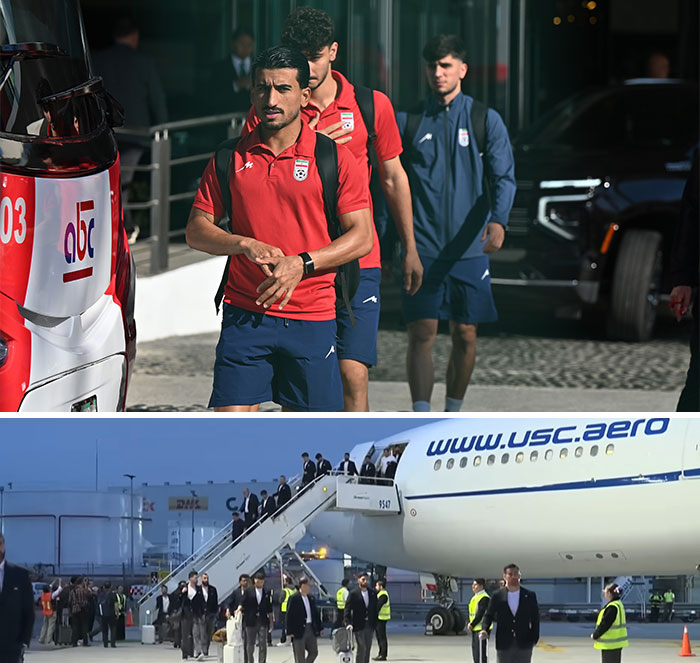
For the first time in FIFA World Cup history, 48 nations will compete across three host countries, the United States, Mexico, and Canada, in what FIFA has billed as the biggest and most ambitious World Cup ever staged.
Set to run from June 11 through July 19, the tournament features several historic milestones.
Mexico City’s iconic Estadio Azteca will become the first stadium to host three World Cup opening matches, while football legends Lionel Messi and Cristiano Ronaldo are both expected to make record-breaking sixth World Cup appearances.
FIFA has even borrowed a page from the Super Bowl playbook by introducing a star-studded halftime show for the final match, co-headlined by Shakira, Madonna, and BTS.
The sheer scale of the tournament has prompted an unprecedented level of preparation in the United States, which will host matches across 11 cities.
Image credits: Annabelle Gordon/UPI/Bloomberg via Getty Images
To oversee security and logistics, U.S. President Donald Trump established a dedicated White House task force for the 2026 World Cup and appointed himself as its chairman.
Trump has repeatedly emphasized the magnitude of the event and pledged that the United States will deliver “the best World Cup ever.”
Yet as the opening whistle draws closer, global attention has increasingly shifted away from the action on the pitch and toward a growing list of controversies unfolding off it.
Over the past few weeks, players and longtime fans of the sport have raised concerns about a series of incidents linked to the United States’ role as the tournament’s primary host.
From visa disputes and lengthy detentions at border checkpoints to fears surrounding immigration policies and international travel restrictions, critics argue that the country has created significant obstacles for people attempting to participate in football’s biggest event.
The controversies have sparked heated debate online, with many fans even questioning whether the United States was the right choice to host the tournament in the first place
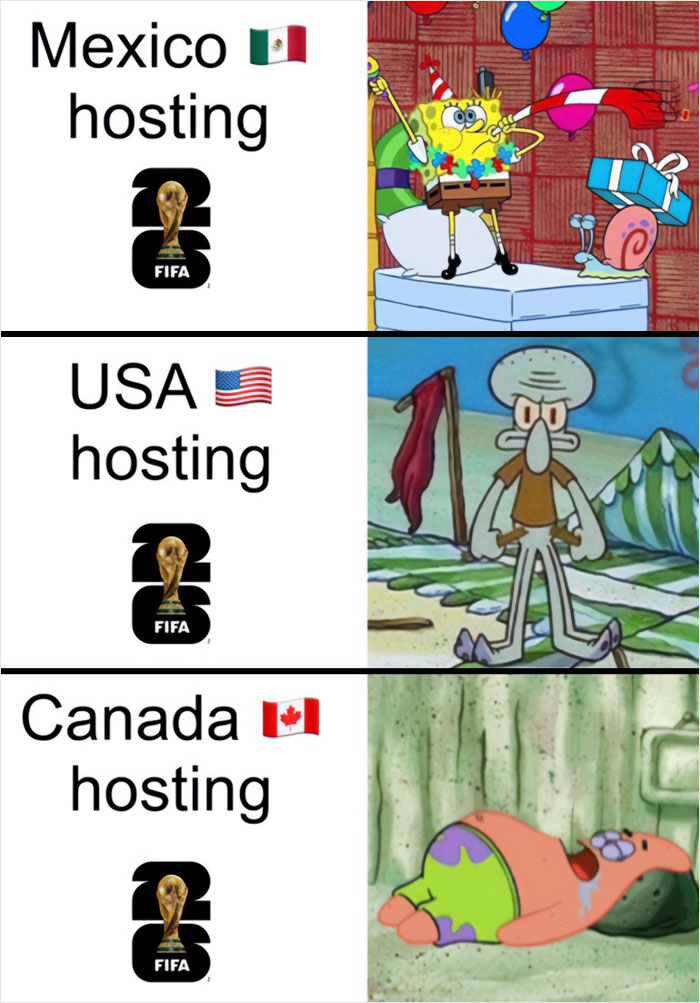
Image credits: nocontextfooty
“We should never allow this mistake to happen again. The US hosting the World Cup is and will always be a big mistake,” one frustrated fan wrote.
Another commented, “I think America shouldn’t host the World Cup again. This is stupid and embarrassing…”
“You guys are missing the salient point of this whole matter: No one in America gives a flying f**k about soccer,” one user claimed, while another argued that the tournament had become overshadowed by issues that had little to do with football itself.
Others were even more blunt. “The football’s not even started and it’s chaos in America,” one user wrote.
As millions of fans prepare to travel across North America for the month-long spectacle, here are 8 controversies involving the United States that triggered outrage ahead of the 2026 FIFA World Cup.
#1 Swiss Star Breel Embolo Faces Visa Delay Before World Cup Entry
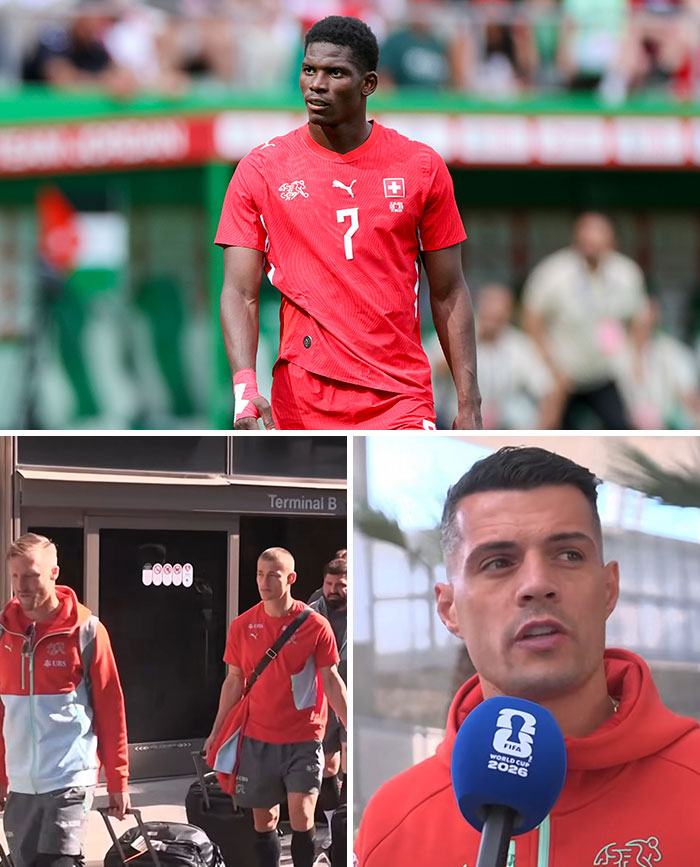
Switzerland’s World Cup preparations were briefly thrown into chaos after star striker Breel Embolo was initially barred from entering the United States due to a last-minute travel authorization review.
On June 2, the Swiss national team was set to depart from Zurich to Los Angeles for their World Cup training camp when Embolo’s Electronic System for Travel Authorization (ESTA) was unexpectedly flagged for “further review” just hours before takeoff.
While his teammates proceeded with their journey, the forward was left behind in Switzerland.
The Swiss Football Association later confirmed the sudden change in his status, stating that the decision came without prior warning.
The association said in a statement, “His ESTA authorisation had been approved until this morning. However, at 10:30am, we were informed that his ESTA application had been placed under further review.”
According to reports, the flagging of his travel waiver was linked to an automated border screening system under U.S. entry protocols, which identified a past legal issue in Switzerland.
Embolo had previously received a suspended fine in 2023 following a 2018 street incident in Basel involving verbal threats, a factor that reportedly triggered additional scrutiny during the background check process.
With his teammates already in the United States, Embolo was forced to make an emergency trip to the U.S. Embassy in Bern on June 3 to apply for a traditional visa in order to resolve the issue.
After expedited processing and verification that the prior conviction was non-violent and strictly verbal, U.S. consular officials approved his visa on June 4.
The Swiss Football Federation confirmed that Embolo was cleared to travel immediately afterward, arriving at the national team’s training camp in San Diego on June 5.
“Great way to eliminate competition,” one commenter wrote, reflecting broader frustration over the growing list of entry-related disruptions involving players ahead of the World Cup.
© Photo: Marco Steinbrenner/DeFodi Images/DeFodi via Getty Images
#2 Iraqi Star Striker Aymen Hussein Held For Hours Of Questioning
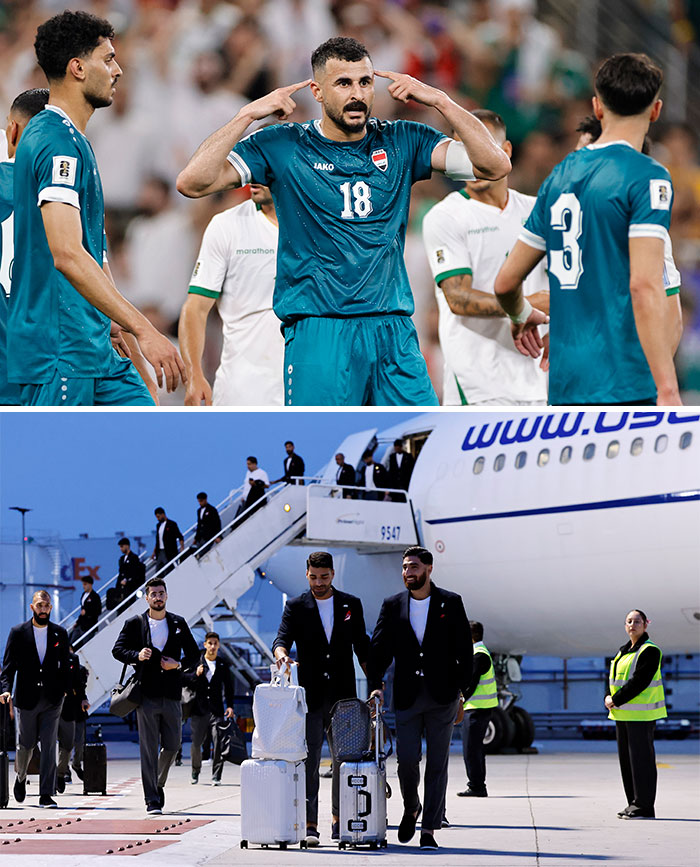
Another controversy erupted when Iraqi national team star Aymen Hussein was reportedly subjected to hours of questioning upon arriving in the United States ahead of World Cup preparations.
Hussein, whose decisive goal against Bolivia in April 2026 secured Iraq’s first World Cup qualification since 1986, arrived at Chicago’s O’Hare International Airport expecting to join his national team for final tournament preparations.
Instead, the striker was reportedly held in secondary screening for nearly seven hours despite possessing valid travel documentation and being one of Iraq’s most recognizable athletes.
According to an Iraqi sporting official, U.S. Customs and Border Protection officers confiscated and thoroughly inspected Hussein’s mobile phone during the lengthy questioning process before eventually allowing him to enter the country.
The situation became even more controversial when Iraqi national team photographer Talal Salah was detained alongside Hussein.
“Hussein’s phone was inspected after he arrived,” the Iraqi official said, as per the Guardian.
“National team photographer Talal Salah was held for more than 10 hours, underwent similar phone checks, and was ultimately denied entry into the United States.”
According to the official, Salah was later deemed “inadmissible” due to unspecified “vetting concerns” and was forced to board a flight back overseas.
The incident sparked criticism because it involved one of the most important figures in Iraqi football.
Hussein is widely regarded as a national hero after scoring the goal that ended Iraq’s 40-year World Cup absence and secured the country’s return to football’s biggest stage for the first time since 1986.
Coming shortly after Somali referee Omar Abdulkadir Artan was denied entry to the United States and subsequently removed from the tournament, the ordeal further fueled concerns about whether the host nation was creating unnecessary barriers for participants traveling to the country.
“Therefore, the United States should never host the World Cup,” one critic wrote.
Another fan commented, “I blame FIFA for messing up the game for everyone.”
“Worst World Cup in the history of the game,” a third user declared.
Others expressed frustration that the tournament was becoming overshadowed by off-field controversies.
“I look forward to the World Cup every four years and when it’s finally in front of proximity this is what’s happening. At this point just cancel the US games,” one fan wrote.
“Really, why is the US hosting? They don’t even call football football,” another joked.
“This is the most World Cup attention the US has ever gotten and it’s for all the worst reasons.”
© Photo: Rodrigo Oropeza/Getty Images
#3 First Somali World Cup Referee Omar Artan Denied Entry To The Us
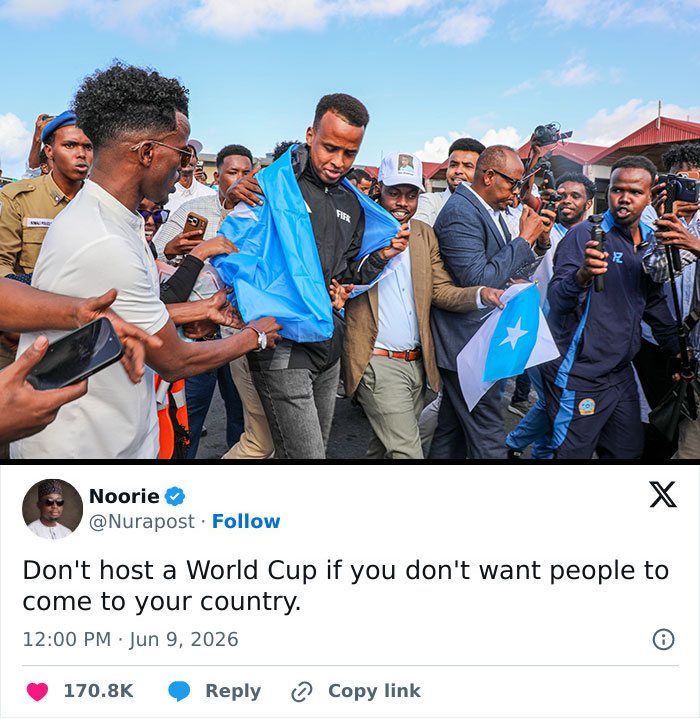
The case of Omar Abdulkadir Artan sparked international outrage after the award-winning official was denied entry into the United States despite holding a valid visa and diplomatic passport.
Artan, who was set to become the first Somali referee ever to officiate at a men’s FIFA World Cup, was reportedly detained and questioned for 11 hours at Miami International Airport before being deported.
The 2025 Confederation of African Football (CAF) Men’s Referee of the Year was ultimately barred from entering the country, with no specific public explanation initially provided by U.S. immigration authorities.
However, Somalia is among several countries subject to strict travel restrictions in the host country.
The controversy carried even greater significance because Artan’s selection had been celebrated as a historic moment for Somalia.
Somali President Hassan Mohamud had previously praised the referee as a source of inspiration for the nation and a symbol of what Somalis could achieve on the global stage.
Following discussions with U.S. authorities, FIFA confirmed that Omar would be unable to participate in the tournament.
“FIFA can confirm that match official Omar Abdulkadir Artan will be unable to train and officiate at the FIFA World Cup 2026 after he was denied entry into the United States,” the organization said in a statement.
“FIFA is not involved in host country immigration processes, including visa adjudications, and has been informed by authorities that Mr Artan’s status will not be changed at present.”
The decision left FIFA with few options. Because FIFA’s refereeing chief, Pierluigi Collina, requires all 52 World Cup referees to remain at a centralized training and security base in Miami throughout the tournament, Artan could not simply be reassigned to matches hosted in Canada or Mexico.
As a result, FIFA was forced to remove him from the officiating roster entirely, highlighting how host-nation immigration policies can ultimately override football governing bodies.
Speaking to the BBC World Service, Andrew Giuliani, who leads the White House Task Force for the World Cup, defended the decision.
“While I can’t go into the derog [derogatory information] on that, I can tell you it was the right decision by Customs and Border Patrol and I support that decision,” he said.
Speaking to The New York Times after the incident, Artan described the ordeal as devastating.
“I am very, very disappointed. I’m just simply a referee who’s trying to live his dream, the biggest dream of my life, to come to the World Cup.”
He added, “I had the right papers and everything. I had the right visa… I think that they have a problem with my country.”
Meanwhile, U.S. Customs and Border Protection said in a statement that the referee had been flagged during border screening due to unspecified “vetting concerns.”
The incident quickly ignited debate across social media, where many fans questioned how a World Cup official with approved travel documentation could be prevented from participating in football’s biggest event.
“If it was an African country denying a European or Western country’s access to the tournament, the FIFA president was going to be more vocal,” one critic argued.
Another wrote, “This is a huge failure on the part of FIFA… if it can’t protect a harmless referee… This is very shameful!”
Others mocked the situation, with one user joking, “I think those American immigration officers interpreted ‘referee’ as ‘refugee.’”
“When visa restrictions and travel bans prevent qualified referees, athletes, and fans from participating, people begin to ask whether football is still bringing the world together. Football should unite nations, not divide them.”
However, not everyone viewed the controversy negatively.
One supporter argued, “The name he made in a few days is even better than officiating at the World Cup… He is happy.”
© Photo: Abuukar Mohamed Muhidin/Anadolu via Getty Images
#4 Uzbekistan’s World Cup Team Screened By K-9 Units And Metal Detectors
Players and staff of Uzbekistan’s national football team were subjected to extensive security checks ahead of a pre-World Cup friendly match against the Netherlands.
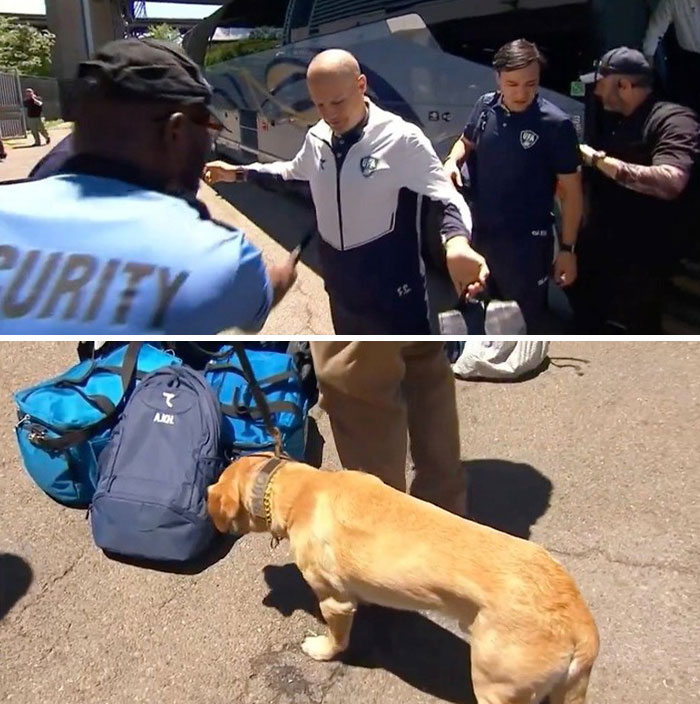
The screening took place at the entrance to Icahn Stadium in New York and was captured in videos that quickly spread across social media.
Footage showed players lining up on the pavement while security personnel used K-9 units, hand-held scanners, and metal detectors to inspect both team members and their belongings.
Images from the scene also showed bags, equipment, and personal items laid out on the ground as security teams carried out thorough checks before allowing the squad into the venue.
The controversy intensified when former World Cup winner and Uzbekistan manager Fabio Cannavaro publicly questioned why his team appeared to be the only side subjected to such extensive screening.
Speaking to CGTN Sports Scene, Cannavaro said, “They said to me it’s the rules, but in the end the check was only for us.”
According to Cannavaro, Uzbekistan’s players, luggage, and even tactical boards were carefully inspected, while the Netherlands squad reportedly faced no comparable checks.
“There is no reason why teams should be humiliated like this,” one fan wrote.
Others pointed to the growing list of security-related controversies involving teams and officials arriving in the United States ahead of the tournament.
“This World Cup hasn’t even started yet and, in my opinion, it’s already shaping up to be the worst World Cup ever,” another commenter argued.
Others questioned, “If the US doesn’t want football teams, why would they even host the cup?”
Meanwhile, supporters of the procedures noted that K-9 units, metal detectors, and security screenings are standard operating measures at major American sporting venues and are designed to protect athletes and spectators during high-profile events.
“This is fairly common for major events. They are b*mb-sniffing dogs,” one user pointed out.
Another wrote, “To be fair, the United States does that to all sports teams… Even NFL and NBA teams go through some security sweep.”
© Photo: ESPN
#5 “Straight Up Humiliation”: Senegal Squad Subjected To Strict Security Checks
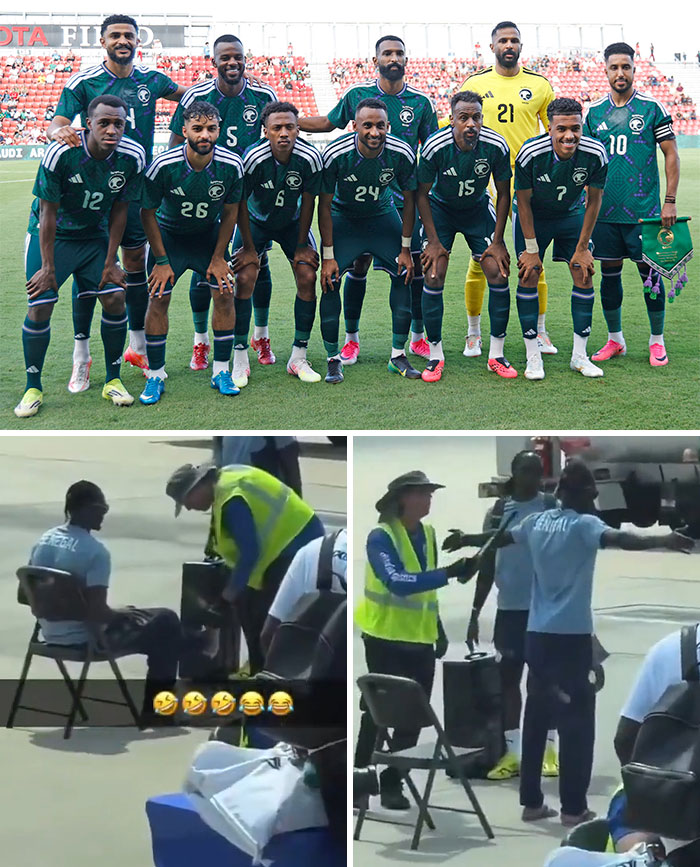
Viral videos circulating on social media showed members of Senegal’s national football team undergoing strict security checks immediately after arriving in the United States.
The footage reportedly showed players standing beside their luggage on an airport tarmac in San Antonio shortly after disembarking, while security personnel conducted inspections before they were allowed to proceed into the terminal.
In one clip, a player appeared to stand with his arms extended while a staff member performed a hand-held security screening.
According to multiple reports, members of the squad were required to undergo detailed baggage checks directly beside the aircraft.
Viral videos also appeared to show football stars Sadio Mané and Kalidou Koulibaly being subjected to security screenings, with personnel reportedly inspecting personal belongings, plastic bags, and other items before the team could leave the airport.
The images quickly sparked outrage online, with critics accusing American authorities of treating international athletes more like suspects than honored guests at one of the world’s largest sporting events.
“Did any white teams get treated like this, or is this treatment reserved for Senegal? Bizarre,” one social media user wrote.
Another commenter was even more critical, writing, “This is straight up humiliation and a disgrace. They’d never put white boys through the same.”
“What’s being defended as ‘security procedure’ looks to me like pure humiliation theatre,” another person argued.
“You can’t treat players like suspects before they’ve even set foot in the tournament. It’s pure and practically wrong.”
However, the controversy took an unexpected turn when the Senegalese Football Federation (FSF) publicly defended the procedures.
In an official statement, the federation explained that the team’s arrival logistics differed from those of most commercial travelers.
According to the FSF, players were transported directly from their aircraft to buses on the tarmac in order to save time, meaning standard Transportation Security Administration (TSA) screening procedures had to be conducted plane-side rather than inside the airport terminal.
The federation ultimately described the inspections as “standard airport security procedures.”
Many online users agreed with that explanation.
“That’s how you go through TSA when you travel a chartered flight. I’ve done it a few times on domestic flights,” one person wrote.
The same user added, “This is also way better than going through the airport. They finish this check and can get right on their bus.”
Others echoed the sentiment, with one commenter writing, “Private flights do this, this is normal.”
“Isn’t this just standard security, but they’re doing it outside because they were on a private jet?” another asked.
© Photo: Ronald Cortes/Getty Images
#6 Scotland Fans Lose US Travel Authorization Just Hours Before Flight
Another controversy emerged when dozens of Scotland supporters reportedly had their U.S. travel authorizations revoked just days before the World Cup, despite having received approval months earlier.
As British citizens, Scottish fans typically enter the United States through the Electronic System for Travel Authorization (ESTA) visa-waiver program.
However, many members of Scotland’s famous “Tartan Army” fan base said their previously approved applications suddenly changed to “pending” and later “travel not authorized” without any explanation from U.S. authorities.
The situation sparked outrage because many supporters had already spent thousands of pounds on non-refundable flights, hotels, and match tickets for Scotland’s first World Cup appearance in decades.
One of the most widely reported cases involved Michael Wright, who was preparing to fly from Manchester Airport for his dream 30th birthday trip.
Wright had planned to attend Scotland’s group-stage matches against Haiti and Morocco alongside his brother.
However, while at the airport, his ESTA status reportedly changed from “approved” to “pending” and then to “travel not authorized” just one hour before departure.
Speaking to BBC Scotland News, Wright said: “I don’t think I’ve ever felt that bad.”
He added, “I sent my brother through security because I still wanted him to go and enjoy his holiday. And I didn’t want him to see me ready to break down.”
Wright also told the outlet that he could think of “no valid reason” for the sudden change to his travel status.
Many travel insurers refused to cover the losses, arguing that securing valid travel authorization ultimately remains the traveler’s responsibility.
The growing backlash eventually prompted intervention from Scotland’s First Minister, John Swinney, who held discussions with American officials in an effort to resolve the issue.
“I have asked officials to convey our hope that they can resolve this so that Scotland’s fans do not miss out,” Swinney said.
Addressing the Scottish Parliament, he added: “I am aware that the United States Embassy has issued advice to individuals affected by ESTA refusals, indicating that they may apply for a visa through the FIFA Pass System.”
“I have asked for specific representations and engagement to be taken forward with the Consul General of the United States in Scotland, that has been undertaken and we will do all that we can to help resolve these issues.”
The incident triggered a wave of criticism online. One user fumed, “Never again should America host the World Cup. Sh*t infrastructure, travel restrictions are bonkers and the time zones make it unwatchable.”
Another claimed, “Got blocked travel myself after paying for flight and accommodation. Disgrace of a World Cup.”
“As an American myself, they should never allow the US to host any type of football event again. This is the world’s game, not a select amount of countries’ game,” a third commenter argued.
Others were equally critical, writing, “No World Cup has ever been organized this poorly.”
“America should be banned from hosting future international sporting events.”

© Photo: Rob Casey/SNS Group via Getty Images
#7 World Cup Reporter Allegedly Targeted By Racist Attack
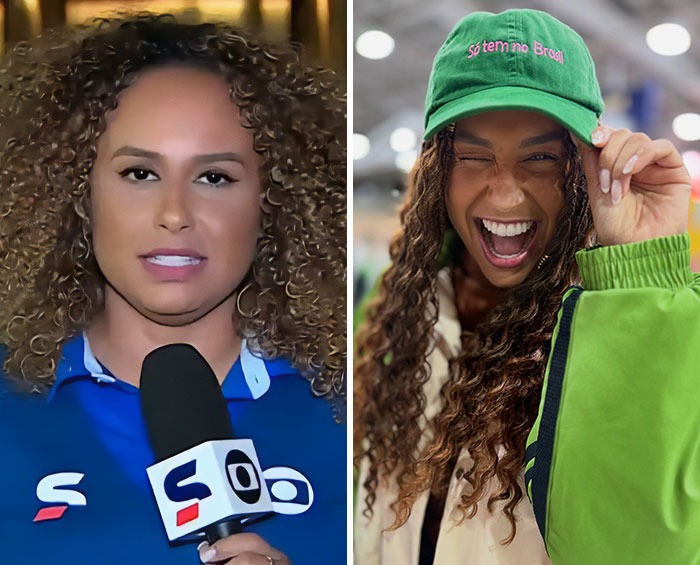
Brazilian television journalist Karine Alves alleged that she was subjected to discriminatory treatment by U.S. border officials upon arriving in New Jersey to cover the 2026 FIFA World Cup.
Alves, a prominent reporter for TV Globo and host of the popular sports program Esporte Espetacular, spoke publicly about the experience during a live segment on Bom Dia Brasil.
According to her, immigration officers subjected her to an unusually intrusive inspection.
“When I arrived in the United States, I didn’t quite understand, but they asked me to lift my hair, albeit in a somewhat abrupt way,” Karine recounted.
The journalist described the interaction as both harsh and rude, saying she was stunned by the way she was approached.
What sparked the most backlash was Alves’ claim that none of her white colleagues traveling with her appeared to receive the same treatment.
She noted that she was singled out for the physical inspection, fueling accusations of racial profiling and reigniting discussions about how Black travelers are treated at international borders.
Karine added, “Many Black women go through this and complain about it when they arrive here in the United States.”
The incident quickly went viral online, with many social media users arguing that Black women’s natural hair is too often treated as a security concern or subjected to scrutiny that other travelers rarely face.
“US has had this kind of treatment forever. I am not condoning such rudeness,” one commenter wrote.
Others said, “This thing of always checking hair has always existed in the United States. I’ve already gone through it 2 out of the 8 times I’ve come here.”
“Imagine traveling thousands of kilometers to cover the World Cup and being treated as a suspect before even being welcomed as a visitor.”
© Photo: sportv
#8 Iran Claims US Move Leaves Thousands Of Fans Locked Out Of World Cup
Another major controversy has emerged after Iran’s football federation claimed that the United States has revoked its allocated ticket quota for Iranian supporters ahead of the World Cup, effectively blocking thousands of fans from attending the group stage matches.
According to FIFA regulations, each participating nation is entitled to approximately 8% of stadium capacity for its group-stage fixtures, allowing federations to distribute official tickets to traveling supporters.
However, Iran’s Football Federation (FFIRI) recently announced that this entire allocation had been unexpectedly withdrawn, leaving it unable to provide any official tickets to fans.
In a strongly worded statement, the federation accused the United States of deliberately obstructing Iranian supporters from attending matches.
“With less than three days remaining until the start of the 2026 World Cup… the United States has once again acted to obstruct the presence of Iranian supporters at the stadiums hosting the national team’s three group stage matches,” the FFIRI said.
As a result, thousands of Iranian supporters who had already purchased non-refundable flights, hotel bookings, and travel arrangements are now left in limbo, unable to access match tickets despite having made significant financial commitments.
FIFA has acknowledged the situation, stating that it is engaged in urgent discussions to “maximize opportunities for Iranian supporters to attend,” though no immediate resolution has been confirmed.
The ticketing crisis adds to a growing list of complications for Iran’s World Cup campaign.
Earlier this May, the team relocated its training base from Arizona to Tijuana, Mexico, citing difficulties with hosting arrangements in the United States.
The squad has also faced logistical challenges, including visa issues affecting members of its backroom staff and travel restrictions requiring players to fly in and out of the U.S. on matchdays.
More than a dozen administrative officials were reportedly denied entry, further straining preparations for the tournament.
“Whats the point of a World Cup if noone can go lol,” one user wrote.
“So why did FIFA ask Iran to come play the World Cup if they won’t allow their fans?” another commented.
“No fans, no players, no referees, anything else they want to remove from the World Cup? At this point let’s cancel the whole thing,” a third user added.