India’s real-life “Mowgli Girl,” who was found wandering alone in a jungle as a child, tragically passed away at just 18 years old on the morning of Monday, June 15.
Ehsaas first captured global attention in 2017 after she was discovered roaming through the forests of the Katarniaghat Wildlife Sanctuary in Uttar Pradesh, India, displaying feral behavior that drew comparisons to Rudyard Kipling’s fictional character, Mowgli.
Over the years, her extraordinary journey from life in the wilderness to rehabilitation touched millions, though she continued to face significant physical and developmental challenges throughout her life.
Ehsaas was known as the “Mowgli Girl” because her feral behavior, lack of human socialization, and appearance mirrored the fictional character
Image credits: HT-Videos
In January 2017, local villagers foraging in the forest first spotted the young girl, who was estimated to be around 8 years old.
She was unclothed, heavily tanned from prolonged exposure to the elements, and had matted hair and claw-like nails.
Sub-inspector Suresh Yadav and his team reportedly encountered her later during a routine patrol.
She was sitting among a troop of monkeys, and when the police officer approached to rescue her, the girl began screeching at him, mimicking the animals’ defensive behavior.
Image credits: NastyaSensei/pexels (not an actual photo)
The rescue proved extremely difficult because the monkeys fiercely resisted the officers’ attempts to take her away.
Despite the resistance and the girl’s terror of human contact, the patrol team managed to safely retrieve her from the wild.
After her rescue, she spent two months at Bahraich District Hospital receiving treatment for acute health issues, including severe diarrhoea, critically low haemoglobin levels of just 5.8 units, and internal parasites.
The child was found abandoned in a severely neglected condition at the age of 8 in Uttar Pradesh, India, back in 2017
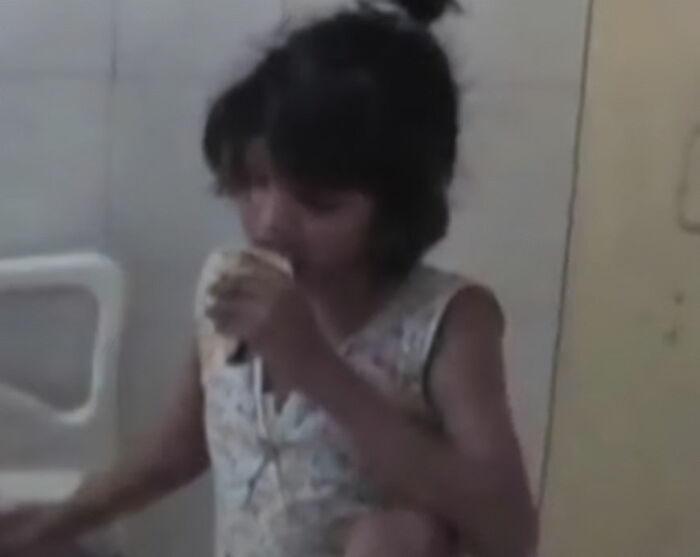
Image credits: MakeSomeNoise-Skybound
She was then transferred to Lucknow in April 2017, where the Nirvan Organization officially renamed her Ehsaas, meaning “feeling.”
When she arrived at the Nirvan Rajkiya Bal Grih Visheshikrit shelter in Lucknow, Ehsaas completely lacked human socialization.
Caregivers spent months helping her unlearn walking on all fours before eventually teaching her to stand and walk fully upright.
She initially refused cooked food, threw away her plates, and would only eat food scattered directly on the floor. Over time, she learned to sit and eat meals normally.
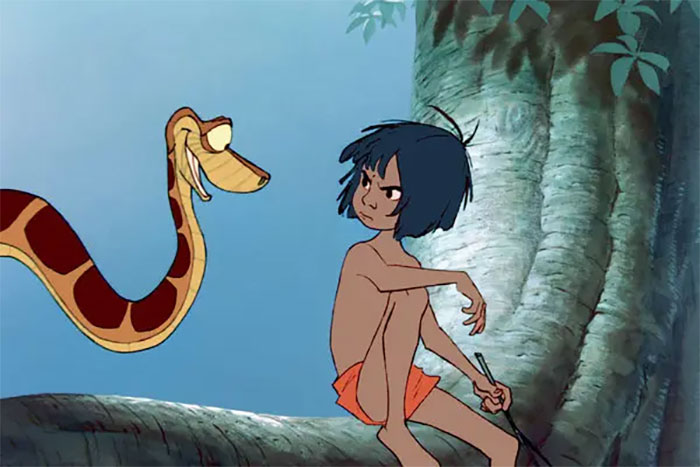
Image credits: Walt Disney Studios
She also strongly resisted wearing clothes, often tearing off any garments she was given. Through patient care, she gradually became comfortable wearing clothes every day.
The organization’s chairman, Suresh Singh Dhapola, told the Times of India, “Gradually, she began covering herself with a blanket in public, accepted clothing and learned to stand upright with support. Yet she remained unable to speak and avoided eye contact.”
Over the following years, although she never developed verbal speech because of her severe intellectual disabilities, she stopped growling and screeching at strangers.
When found, Ehsaas walked on all fours, ate food scattered on the floor, did not understand spoken language, and remained unclothed
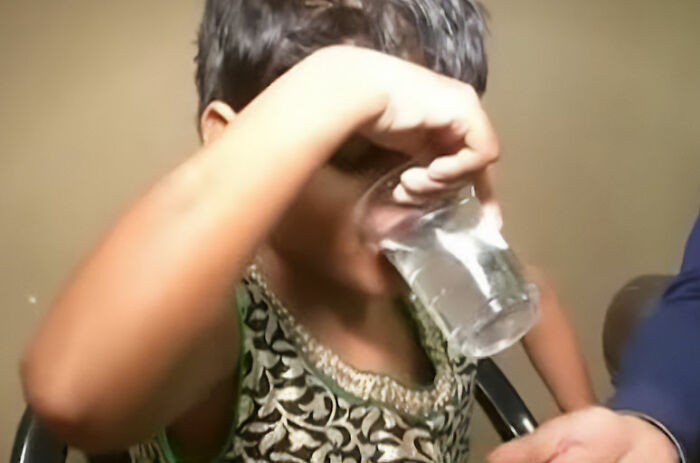
Image credits: HT-Videos
Image credits: Vgsingh9Vg
Instead, she communicated through facial expressions, nods, and gestures.
She began recognizing familiar faces, learned to dance, and enjoyed playing with her classmates at the centre.
She formed her strongest emotional bond with her primary caretaker, Rani, whom she regarded as her mother figure and affectionately called “Amma.”
Despite her social progress, her rehabilitation remained an ongoing medical battle, as doctors confirmed that her brain was severely underdeveloped, resulting in permanent cognitive limitations.
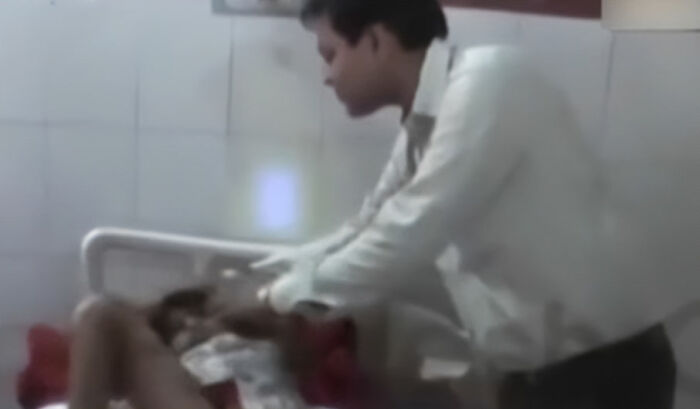
Image credits: cgtn
She required constant supervision and regular treatment at the Dr. Ram Manohar Lohia Institute of Medical Sciences to manage recurring epileptic seizures until her recent passing.
Ehsaas reportedly passed away on June 15 from septicaemia caused by severe lung disease.
Just days earlier, on June 8, she fell seriously ill and was admitted to the hospital.
After her condition stabilized under medical care, she was discharged on June 11 and returned to her rehabilitation home.
Authorities concluded that Ehsaas had been abandoned by her biological parents, although their identities were never discovered
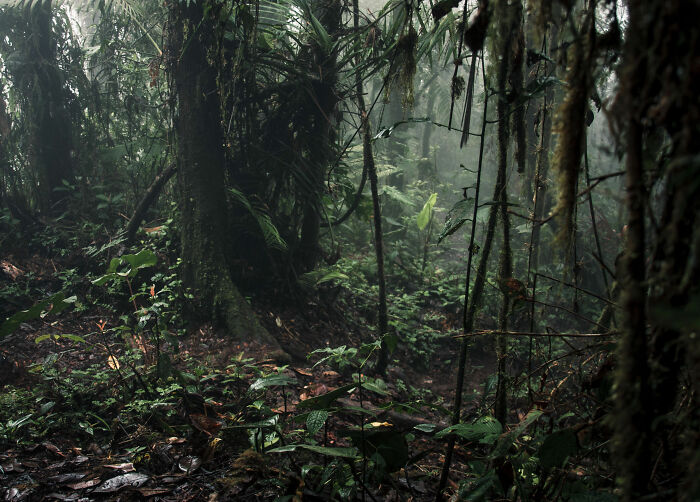
Image credits: Lloyd Douglas/pexels (not an actual photo)
However, on the day of her passing, caregivers told local media that her blood oxygen saturation level had dropped critically to around 40%.
Shortly after arriving at the hospital, Ehsaas succumbed to her health complications despite efforts to save her.
Remembering her, Nirvan Foundation chairman Suresh Singh Dhapola told the Times of India, “Though Ehsaas has gone, the memories she left behind will remain with us forever.”
Medical experts and forest officials concluded that Ehsaas had likely been intentionally abandoned by her parents or guardians shortly before she was found.

Forest officials also clarified that it would have been impossible for an 8-year-old child to survive alone in the dangerous sanctuary for years without being detected by security cameras or during wildlife census operations.
They believe she was likely left by the roadside within the forest only a short time before the patrol team found her.
Because Ehsaas was unable to speak or provide any identifying information, authorities were never able to trace her biological family.