Menopause, the point around age 45-55 when menstruation permanently stops, is characterized by several physical and psychological troubles.
As estrogen and progesterone levels drop, most experience hot flashes, night sweats, mood swings, disturbed sleep, fatigue, anxiety, and forgetfulness.
On top of all that, a new preclinical study has shed light on a less visible but more critical consequence that affects millions of postmenopausal women worldwide.
“This should motivate clinicians to be more aware of the essential role of estrogen for women’s brains, because once memory is gone, it’s gone,” said Dr. Serdar Bulun, a senior author of the study.
Researchers found out why older women are twice as likely to get Alzheimer’s as men
Image credits: Magnific
Women account for nearly two-thirds of all Alzheimer’s disease cases worldwide. In the United States alone, more than 12 million women live with or care for somebody with the disease, which targets women in their 60s twice as much as men.
According to the Alzheimer’s Association, of the 7.4 million people age 65 and older with Alzheimer’s in the United States, 4.5 million are women.
The new study, conducted by Northwestern University in Chicago, Illinois, was published in Aging Cell on May 26, 2026.

Image credits: Unsplash
It found that the dip in estrogen after menopause, along with general aging, accelerates the architectural collapse of the hippocampal extracellular matrix (ECM) in female brains, thereby increasing Alzheimer’s risk in older women.
The ECM is an intercellular glue made of proteins and sugars that acts as a scaffold, surrounding, cushioning, and holding the body’s cells together. It degrades more quickly with age in women than in men.
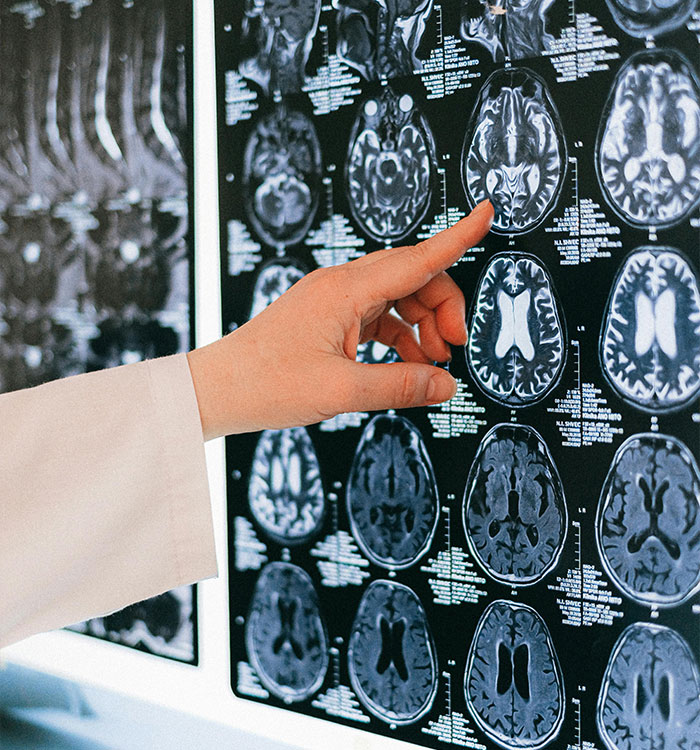
Image credits: Pexels
Making up nearly 20% of total brain volume, ECM promotes cell adhesion and cell-to-cell communication, especially in the hippocampus — the part of the temporal lobe that helps with memory processing and spatial navigation.
“This study tells us that females — but not males — may be uniquely sensitive to loss of brain estrogen at old age, potentially contributing to an increased risk of Alzheimer’s disease,” said corresponding author Dr. Hong Zhao, research professor of obstetrics and gynecology in the division of reproductive science at Northwestern’s Feinberg School of Medicine.
A postmenopausal brain deficiency was found to trigger a faster ECM degradation
@menopausematter.org Have you watched the M Factor 2: Before The Pause? #menopause #menopausesupport #menopauseawareness ♬ original sound – Menopause Matter
In the past, researchers have found that after menopause, a drop in estrogen causes memory loss and brain decline, as the hormone normally protects the brain by boosting energy, lowering inflammation, and blocking the proteins that cause Alzheimer’s.
The new study was the first to examine the impact of estrogen loss within the ECM between cells, shifting the focus away from the traditional approach.
Image credits: Getty
In a menstruating woman, the ovaries are the primary source of estrogen production. As the ovaries shut down, those levels drop drastically, forcing the brain to produce its own localized estrogen.
For the research, scientists used genetically engineered mice, both old and young, male and female.
They discovered that older female mice were specifically sensitive to depleted estrogen, which made them more vulnerable to Alzheimer’s.

Image credits: Unsplash
“We revealed that estrogen regulates ECM gene expression in the hippocampus in a s*x-specific manner,” the study concluded.
“Furthermore, brain-specific estrogen deficiency, achieved through targeted deletion of aromatase (an enzyme), led to alterations in hippocampal ECM that correlated with behavioral changes and memory impairment. Whole-body aromatase deletion, resulting in severe estrogen deprivation, is associated with robust behavioral abnormalities.”
The new findings could pave the way for a new treatment of Alzheimer’s disease

Image credits: Unsplash
Traditionally, hormone replacement therapy (HRT) helps aging women restore estrogen levels to protect them against Alzheimer’s.
Current Alzheimer’s medications, like lecanemab and donanemab, work by clearing out the abnormal protein buildup in the brain that causes the disease.
However, clinical studies have produced mixed results. Some studies found that these medicines improved memory and cognitive function, while others showed little benefit or even harmful effects.

Image credits: Unsplash
Northwestern University’s findings, if clinically proven effective, would suggest a possible new treatment approach focused on restoring the ECM in addition to targeting brain cells.
“More research is needed to understand how estrogen affects the female brain and why estrogen loss increases AD risk in women,” Dr. Zhao said.

Image credits: Pexels
“Understanding these mechanisms could help researchers develop safer and more effective HRT strategies to prevent or slow the progression of AD in women.”
“Our findings will hopefully motivate future studies to better understand how this matrix is altered in postmenopausal women, and how it could potentially induce susceptibility to Alzheimer’s disease,” Dr. Zhao added.
“Brain fog is the worst.” Netizens share their personal health experiences in reaction to the new study